 EN
EN
 Chinese
 Turkish
 Indonesian
 German
 French
 Spanish
 Portuguese
 Russian
 Italian

Why Technical Textiles Are the Future of Bangladesh's Manufacturing Industry
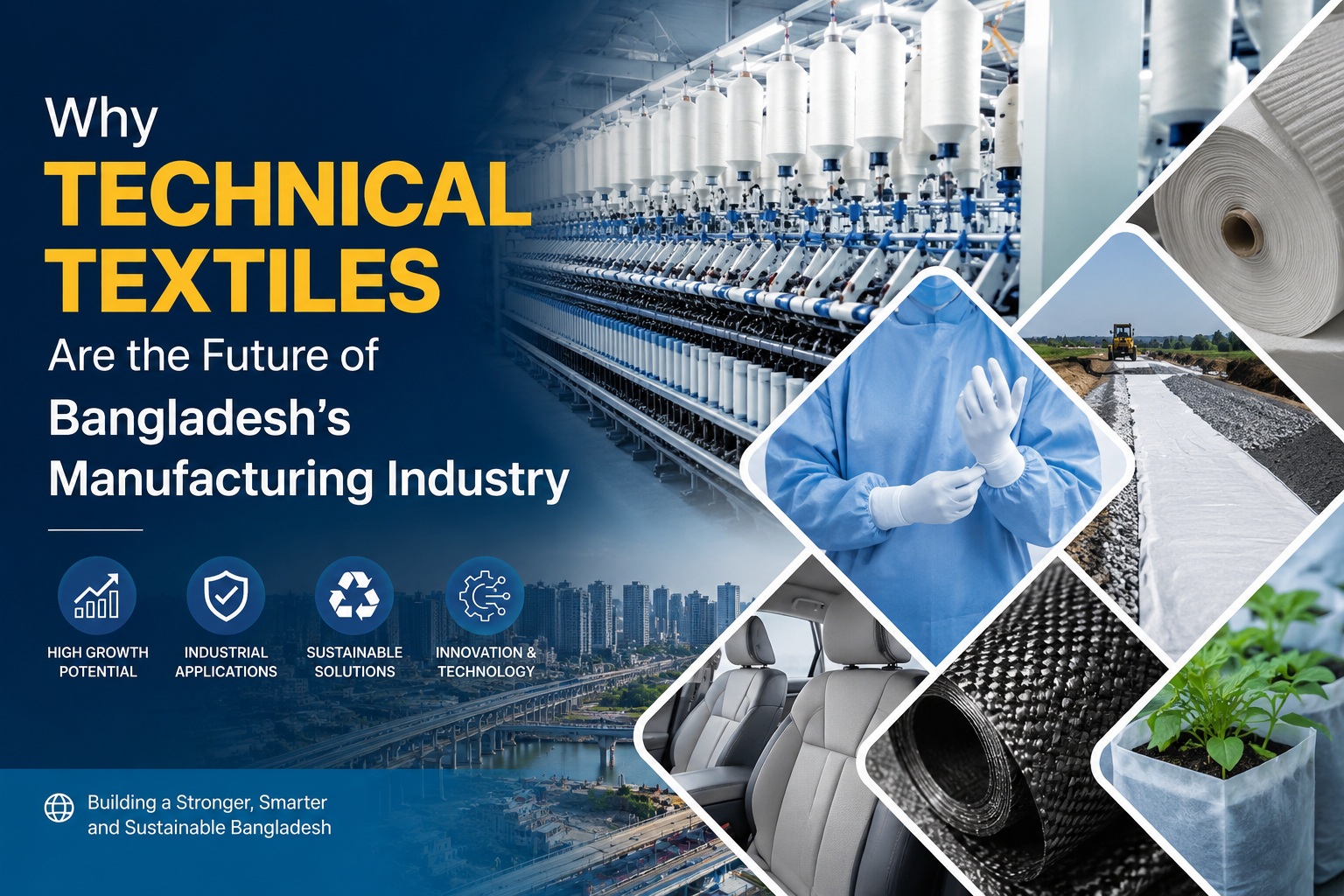
Bangladesh has earned global recognition as one of the world's leading textile and garment manufacturing nations. Over the past few decades, the country's apparel sector has become a major contributor to economic growth, employment generation, and export earnings. However, as global markets evolve and demand shifts toward higher-value industrial products, Bangladesh is increasingly exploring new opportunities beyond traditional apparel manufacturing. Among these opportunities, technical textiles have emerged as one of the most promising sectors for the future of the country's manufacturing industry.
Technical textiles are specialized textile products designed primarily for performance, functionality, and industrial applications rather than fashion or aesthetics. These advanced materials are used across a wide range of industries, including healthcare, construction, automotive, transportation, agriculture, defense, environmental protection, infrastructure, and industrial manufacturing. Products such as geotextiles, nonwoven fabrics, industrial filters, protective clothing, medical textiles, and advanced synthetic materials are becoming increasingly essential in modern economies.
The global technical textile market is experiencing rapid growth. Industry analysts project that the market could reach approximately USD 325 billion by 2030, driven by increasing industrialization, infrastructure development, healthcare expansion, sustainability initiatives, and technological innovation. As countries around the world invest in advanced manufacturing and high-performance materials, demand for technical textiles continues to rise across multiple sectors.
Bangladesh is well-positioned to capitalize on this growing global market. The country already possesses a strong textile manufacturing base, a skilled workforce, competitive production costs, and extensive export experience. These advantages provide an ideal foundation for expanding into technical textile production and moving up the global value chain. By diversifying into higher-value products, Bangladesh can strengthen its industrial competitiveness and reduce reliance on conventional apparel exports.
One of the key drivers of technical textile demand in Bangladesh is the country's ongoing infrastructure development. Major projects involving highways, bridges, railways, ports, power plants, and urban development increasingly require geotextiles and industrial fabrics to improve durability, stability, and long-term performance. These specialized materials play a critical role in modern construction and engineering projects.
The healthcare sector also presents significant opportunities for technical textile manufacturers. Medical textiles such as surgical gowns, face masks, wound care products, hygiene materials, protective garments, and hospital furnishings have become essential components of healthcare systems worldwide. Growing demand for quality healthcare products is creating new business opportunities for manufacturers seeking to enter this high-growth market segment.
In addition, the automotive and transportation industries are increasingly utilizing technical textiles in vehicle interiors, airbags, insulation systems, filtration components, tire reinforcement materials, and protective applications. As automotive production continues to expand throughout Asia, demand for high-performance textile materials is expected to grow substantially.
Sustainability is another major factor shaping the future of technical textiles. Global brands and industrial buyers are actively seeking environmentally responsible products made from recycled fibers, renewable resources, and sustainable manufacturing processes. Technical textiles contribute to waste reduction, resource efficiency, recycling solutions, and environmental protection. Bangladesh's growing number of green factories and commitment to sustainable manufacturing further strengthen its position in this evolving market.
Technological innovation is also transforming the industry. Smart textiles, wearable technologies, advanced synthetic fibers, functional fabrics, and Industry 4.0 manufacturing systems are creating entirely new categories of textile products. These innovations offer manufacturers opportunities to produce higher-value products with stronger profit margins while meeting the increasingly sophisticated requirements of global industries.
To fully realize the potential of this sector, continued investment in technology, research and development, workforce training, and international partnerships will be essential. Collaboration between manufacturers, technology providers, educational institutions, and government agencies can accelerate the development of Bangladesh's technical textile ecosystem and enhance its competitiveness in international markets.
As Bangladesh continues its journey toward industrial diversification and economic modernization, technical textiles offer a clear pathway for sustainable long-term growth. With expanding domestic demand, growing export opportunities, and increasing global investment in advanced materials, the sector is poised to become a key pillar of the country's future manufacturing landscape.
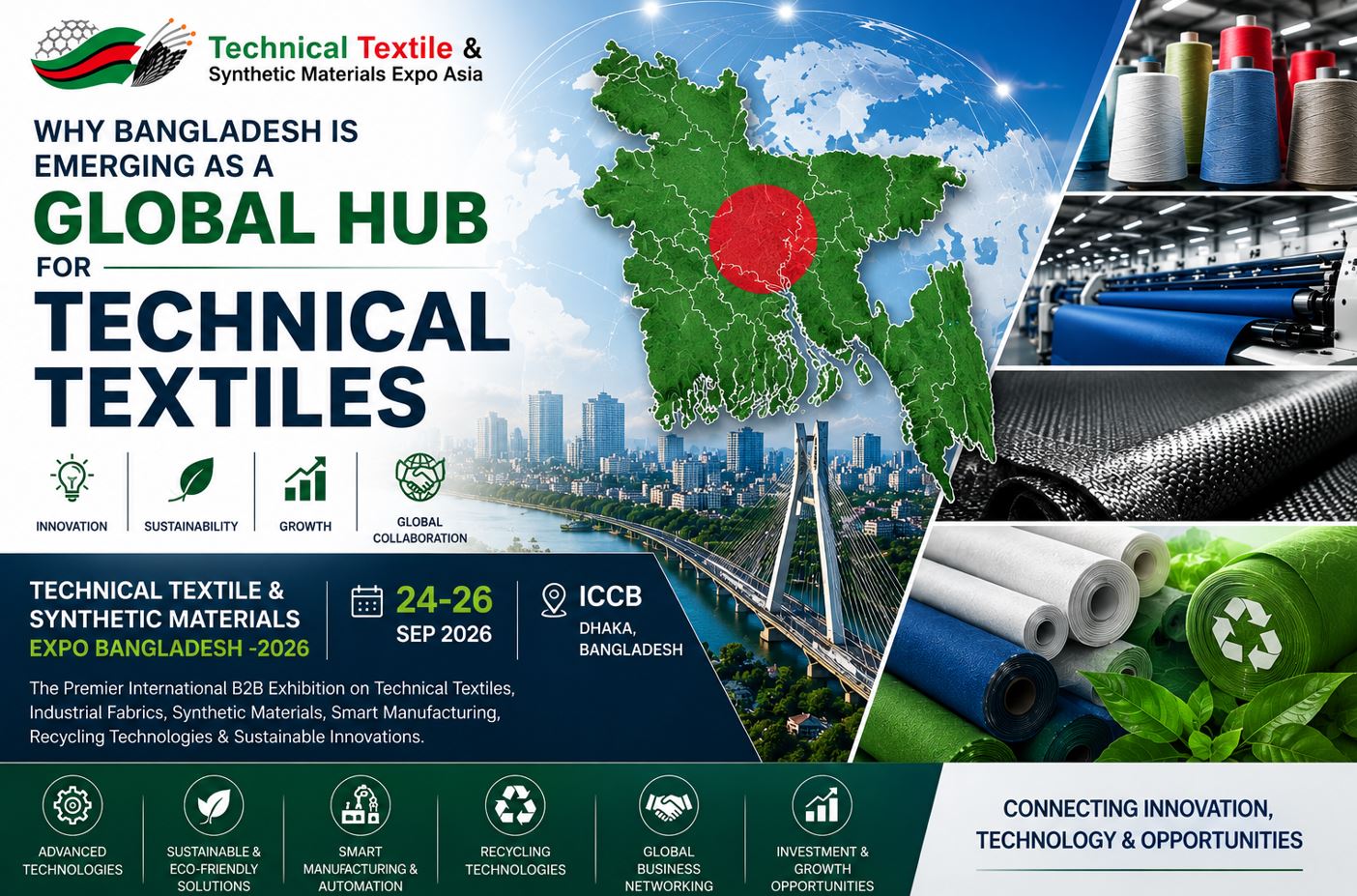
The Technical Textile & Synthetic Materials Expo Bangladesh 2026, scheduled to take place in September 2026 at the International Convention City Bashundhara (ICCB), Dhaka, Bangladesh, will serve as a premier international platform connecting manufacturers, suppliers, technology providers, investors, buyers, and industry professionals. The exhibition will showcase the latest innovations in technical textiles, synthetic materials, smart manufacturing technologies, recycling solutions, and sustainable industrial practices, supporting the continued development of Bangladesh's advanced manufacturing sector.
As global industries increasingly demand innovative, sustainable, and high-performance materials, technical textiles are no longer a niche market—they are becoming a cornerstone of modern industrial development. For Bangladesh, embracing technical textiles represents a strategic opportunity to build a more diversified, resilient, and globally competitive manufacturing economy.
About the Author